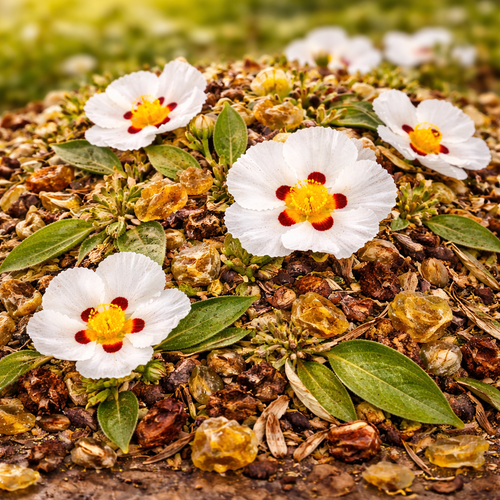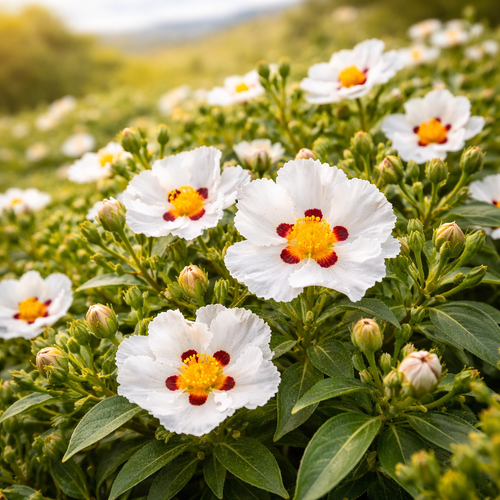

Description
A warm resinous woody profile with dry amber-like depth and distinctive Mediterranean character, valued in perfumery, incense accords, and sophisticated botanical design
Refined Spain Cistus Essential Oil for Professional Use
Steam distilled from the leaves and stems of Cistus ladanifer, this Spanish cistus oil is selected for its rich resinous character and its ability to add structure, warmth, and lasting depth to aromatic compositions.
Its aroma works especially well in natural perfumery, soap, premium personal care, diffuser concepts, and botanical fragrance construction where a resinous, woody, warm, dry character is desired.
Why Spain and Why Steam Distillation
Spanish Mediterranean origin
Cistus ladanifer is closely associated with the western Mediterranean landscape. Spanish material is valued for a dry, warm, resinous profile that works naturally in incense, amber, woody, and botanical fragrance direction.
Steam-distilled aromatic clarity
Steam distillation captures the volatile profile of the leaves and stems, yielding a fluid essential oil that is distinct from the heavier labdanum gum, resinoid, or absolute.
Aromatic Profile and Blending Character
- Overall profile: resinous, woody, warm, dry
- Supporting facets: amber-like depth, balsamic warmth, subtle herbaceous nuance
- Blend role: a persistent base note that grounds and extends aromatic compositions
- Best approach: use in small amounts to support woods, resins, florals, herbs, and citrus
Benefits in Fragrance and Product Design
Long-lasting resinous depth
Adds warmth, persistence, and a dry amber-like foundation to perfume and home-fragrance structures.
Excellent base-note support
Helps anchor brighter citrus, floral, and herbal materials while connecting them to woods and resins.
Distinct Mediterranean identity
Useful when a formula needs a sophisticated dry, woody-resinous signature.
Personal Use and Home Fragrance
Cistus Essential Oil is well suited to diffuser and home-fragrance concepts built around warm woods, resins, incense, or dry Mediterranean botanicals. Because it is persistent, a small amount is usually enough to add depth.
Practical Tips
- Begin at a low level and evaluate after the blend has rested.
- Pair with bergamot or mandarin to brighten the resinous base.
- Combine with lavender, cedarwood, frankincense, or patchouli for greater complexity.
Example Blend Concepts
The concepts below are simple starting points intended to demonstrate aromatic behavior. Always dilute appropriately, evaluate stability and compatibility, and follow the current SDS and applicable safety standards.
Concept: Mediterranean Amber
Profile: warm, resinous, softly bright
Blend idea: Cistus + Bergamot + Lavender
How to use: A balanced starting point for perfume, diffuser, and premium body-care fragrance direction.
Concept: Dry Incense Woods
Profile: woody, resinous, meditative
Blend idea: Cistus + Frankincense + Cedarwood
How to use: Useful for incense-inspired home fragrance and grounded botanical accords.
Concept: Resin and Floral
Profile: deep amber base with a polished floral lift
Blend idea: Cistus + Neroli + Patchouli
How to use: A sophisticated concept for natural perfumery and layered aromatic design.
Tip: Allow trial blends to rest before final evaluation so the top, middle, and base materials can integrate.
Blends Well With
Cistus Essential Oil pairs well with complementary citrus, floral, herbal, woody, and resinous profiles. Consider combining with:
Frequently Asked Questions
What does Cistus Essential Oil smell like?
It has a warm, dry, woody-resinous aroma with amber-like depth, balsamic warmth, and subtle herbaceous facets.
Is Cistus Essential Oil the same as labdanum absolute?
No. Cistus Essential Oil is steam distilled from plant material. Labdanum materials are obtained from the sticky gum or resin and generally have a heavier, sweeter, more ambery profile.
Can I use this in personal care products?
Yes, when properly formulated and diluted. Consult the current SDS, COA, and applicable fragrance or cosmetic standards before use.